
Femme fatale
A seductive archetype who ensnares lovers in deadly traps.

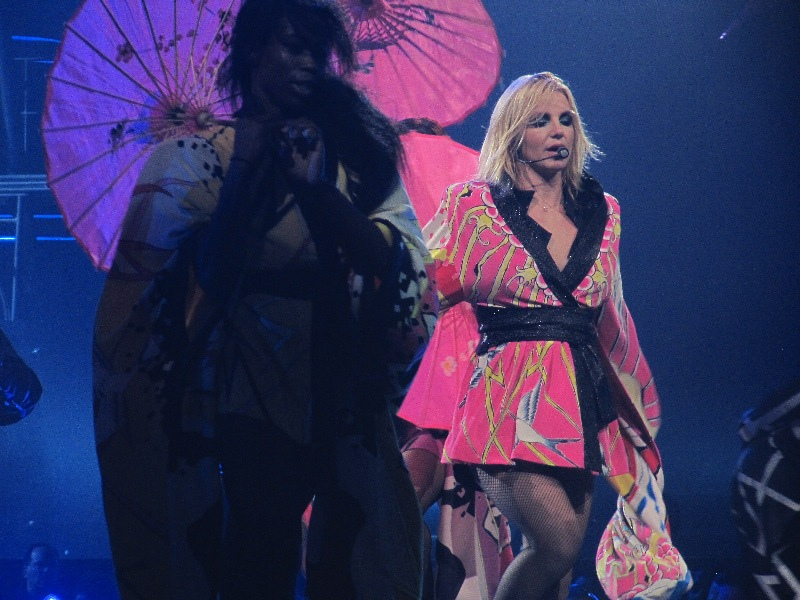
Rachael Purdy from Bridlington, UK · CC BY 2.0
The femme fatale is a stock character: a mysterious, beautiful, and seductive woman whose charms ensnare her lovers, often leading them into compromising, deadly traps. She is an archetype of literature and art, typically villainous or morally ambiguous, evoking mystification and unease. The term originates from the French phrase meaning 'deadly woman' or 'lethal woman.'
- origin
- French phrase 'femme fatale'
- synonyms
- maneater, Mata Hari, vamp
- common traits
- beauty, charm, sexual allure, hidden purpose
- associated genres
- detective fiction, film noir, James Bond films
Lore & Background
The femme fatale archetype exists in the culture, folklore, and myths of many cultures. Ancient mythical or legendary examples include Inanna, Lilith, Circe, Medea, Clytemnestra, Lesbia, Tamamo no Mae, and Visha Kanyas. Historical examples from classical times include Cleopatra and Messalina, as well as the biblical figures Delilah, Jezebel, and Salome. An example from Chinese literature and traditional history is Daji. In Western culture, the femme fatale flourished in the Romantic period in the works of John Keats, notably 'La Belle Dame sans Merci' and 'Lamia,' and in the gothic novel The Monk by Matthew Gregory Lewis. Pre-Raphaelite painters frequently used the classic personifications of the femme fatale as a subject. In the late 19th and early 20th centuries, she became a more fashionable trope, appearing in paintings by Edvard Munch, Gustav Klimt, Franz von Stuck, and Gustave Moreau. During the classic film-noir era of the 1940s and 1950s, the femme fatale flourished in American cinema, with archetypal examples including Phyllis Dietrichson in Double Indemnity and Brigid O'Shaughnessy in The Maltese Falcon.
Reader's Guide
The femme fatale has been a recurring figure across cultures and centuries, embodying anxieties about female sexuality and power. In ancient myths and biblical stories, she appears as a dangerous enchantress or seductress. During the Romantic and Victorian eras, she became a symbol of both allure and moral decay, as seen in literature and Pre-Raphaelite art. The late 19th and early 20th centuries saw her rise in opera and early film, where the 'vamp' persona emerged. In film noir, the femme fatale became a central figure, often manipulating men for her own ends, reflecting postwar tensions about gender roles. Her legacy persists in modern genres such as detective fiction and James Bond films, where she remains a complex, often villainous character. The archetype's enduring appeal lies in its blend of mystery, danger, and seduction, making it a versatile tool for exploring themes of power, desire, and betrayal.
Did You Know?
- Mata Hari, a stage name for Margaretha Geertruida Zelle, was accused of German espionage during World War I and executed by a French firing squad.
- The femme fatale Phyllis Dietrichson in Double Indemnity was ranked #8 on the AFI's list of top film villains.
From Physics to Cinema: A Formative Education
Brian De Palma entered the world on September 11, 1940, in Newark, New Jersey, as the youngest of three boys in an Italian-American family whose roots traced back to Alberona in southern Italy. Raised across Philadelphia and New Hampshire, he attended Protestant and Quaker institutions before graduating from Friends' Central School. His relationship with his father, an orthopedic surgeon, was strained; the young De Palma would secretly shadow his parent to document acts of infidelity, an experience that later seeded the teenage protagonist in Dressed to Kill. A natural tinkerer, he constructed computers in high school and even won a regional science-fair prize for an analog computer designed to solve differential equations. At Columbia University, where he initially studied physics, two films—Citizen Kane and Vertigo—derailed his scientific trajectory and ignited a lifelong obsession with cinema. He then pursued a master's degree in theater at Sarah Lawrence College in 1964, becoming one of the first men in that predominantly female graduate program, where mentors like Wilford Leach and influences ranging from the Maysles brothers to Andy Warhol and Jean-Luc Godard collectively shaped the visual and narrative language he would deploy for decades.
The Experimental Years: Greenwich Village to Hollywood
De Palma's earliest feature work was deeply rooted in the Greenwich Village underground scene. His 1963 co-directed film The Wedding Party, featuring a then-unknown Robert De Niro (credited under the misspelling "Robert Denero"), employed silent-film techniques and the jump-cut, and sat unreleased until 1969. Throughout the late 1960s he sustained himself by shooting commercial and institutional documentaries, including The Responsive Eye (1966), a synced-sound film about a MoMA op-art exhibition that he described as both "very good and very successful." His 1969 documentary Dionysus in '69 captured a Performance Group staging of Euripides' The Bacchae, and its most memorable formal choice was the split-screen, a device De Palma devised specifically to interweave audience reactions with the onstage action. His narrative features from this era—Greetings (1968), which earned a Silver Bear at the Berlin Film Festival, and Hi, Mom! (1970)—starred De Niro and carried a leftist revolutionary sensibility. Each project pushed narrative structure and intertextuality, reflecting his openly stated ambition to become the "American Godard." By 1970 he had crossed to Hollywood, where the frustrating collaboration on Get to Know Your Rabbit (1972) with Tommy Smothers gave way to a string of smaller, more personal films including Sisters and Phantom of the Paradise.
The Hitchcock Inheritance and Genre Mastery
A defining thread through De Palma's career is his sustained dialogue with Alfred Hitchcock's body of work. Obsession (1976) reimagined the psychological terrain of Vertigo and was scored by Bernard Herrmann, Hitchcock's longtime composer. Dressed to Kill (1980) and Body Double (1984) extended that lineage into the suspense and thriller registers, with the former drawing on De Palma's own childhood observations of his father's infidelity. Beyond Hitchcock, his stylistic debts were wide-ranging: Blow Out (1981) was explicitly modeled on Michelangelo Antonioni's Blowup, while Scarface (1983) stood as a remake of Howard Hawks' 1932 gangster picture, dedicated to both Hawks and screenwriter Ben Hecht. This allusive, homage-driven approach allowed De Palma to move fluidly across genres—horror with Carrie (1976), crime with The Untouchables (1987), action with Mission: Impossible (1996), and noir with Femme Fatale (2002)—while maintaining a recognizable visual signature built on split-screens, split-mirrors, and meticulously staged violence. His work in the suspense, crime, and psychological thriller lanes over more than five decades cemented his standing as a central figure of the New Hollywood generation.
Critical Reception and Enduring Legacy
De Palma's films have consistently provoked polarized responses. Critics have faulted his work for its graphic violence and sexual content, yet prominent American voices such as Roger Ebert and Pauline Kael championed his craft and vision. Carrie, his 1976 adaptation of Stephen King's novel, achieved a rare institutional honor when the Library of Congress inducted it into the National Film Registry, a testament to its cultural and artistic significance. The film's production circumstances were modest—underfunded by United Artists and made before King's novel had become a bestseller—yet De Palma's reworking of key plot elements and his ensemble of young, relatively unknown actors gave the project a distinctive, almost subversive energy. In 2015, director Noah Baumbach produced a well-received documentary in which De Palma reflected on his career, offering audiences a rare window into the thinking behind his most celebrated and controversial works. Together, these recognitions and the continued cult following of titles like Phantom of the Paradise, Sisters, and Carlito's Way (1992) underscore a filmmaker whose influence on American genre cinema remains substantial and, for many, still underappreciated in mainstream discourse.
Gallery





Frequently Asked Questions
What is a femme fatale in storytelling?
She is a recurring stock archetype of a beautiful, seductive woman who lures her targets into dangerous or fatal situations. Rather than a single named character, she functions as a morally ambiguous or outright villainous figure across literature and visual art.
Where does the term 'femme fatale' come from?
It is a direct borrowing from French, where the phrase translates to 'deadly woman' or 'lethal woman.' English-language criticism has used the label since at least the early twentieth century.
What traits define a femme fatale character?
The core markers are striking beauty, magnetic charm, and sexual allure that conceal a hidden agenda. She typically draws lovers into compromising or life-threatening traps, evoking a sense of mystification and unease in the audience.
Which genres most commonly feature the femme fatale?
Detective fiction, film noir, and James Bond films are the settings where the archetype appears most prominently. She also recurs broadly across other literary and cinematic traditions as a narrative device.
More in Narrative Techniques & Genres 1-24
Spotted an error? Know more?
This is a living reference — every entry is fact-audited, and reader corrections feed straight into our audit queue. Suggest an edit · See this site's audit record